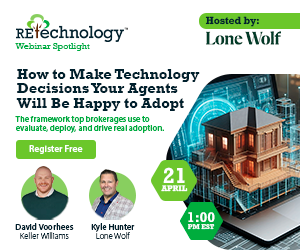
Bottom line: Keller Williams just embedded Lone Wolf’s Transact platform directly inside Command, and the announcement matters far beyond the KW agent base. It is a working blueprint for how the largest brokerages and franchises in North America will resolve the build, buy, partner question over the next 36 months. Every CEO and board member running an organized real estate organization should spend an hour with the recording.
I moderated the webinar last week with David Voorhees, who leads Keller Williams Labs, and Kyle Hunter, the Lone Wolf executive who owns the partnership on the vendor side. The conversation was unusually candid. What follows is why broker-owners, MLS executives, and franchise leaders should put the recording on their calendar and what they will take away when they do.

Reason one: The relationship took years, not quarters.
If you have a young vendor in your accelerator, or a head of innovation chasing an enterprise deal, this is the section to forward. Voorhees and Hunter were transparent that the Transact for Command integration began with quarterly conversations in Austin years before any contract was signed. Hunter described sitting down with David and his team to understand where Keller Williams was building, where Lone Wolf was building, and where the seams could become integrations rather than collisions. Patience at that scale is the price of admission. Brokerages evaluating partnerships should adopt the same discipline on the buy side.
Reason two: The data sovereignty principle is now a contract requirement.
Hunter walked through Lone Wolf’s open API architecture, which the company launched at Inman New York earlier this year. Every API is documented and accessible behind security review. That posture is no longer optional for any vendor that wants to serve a serious brokerage. I made the point on the webinar and I will make it again here. When a broker contributes data to a vendor system, that data belongs to the broker. It must be returnable. It must be portable. It must hydrate the broker’s own AI strategy, not just the vendor’s roadmap. Lone Wolf is now on the right side of that line. Several of their competitors are not. Brokers should audit their existing contracts against this standard before they sign another renewal.
Reason three: Adoption is a training problem, not a software problem.
Voorhees was direct about how Keller Williams clears the adoption hurdle that defeats most brokerages. The KW Labs team owns the agent experience end to end. Training infrastructure, beta cohorts, market center education, and a structured migration window all sit upstream of any technology selection. Hunter, who has worked with enterprise customers across Lone Wolf’s portfolio, said this rollout was the best they had ever seen. He pointed to standing-room-only sessions at Family Reunion where agents were cheering about new functionality. That is not vendor flattery. That is a CEO’s lesson in what you have to build internally before any third-party tool can earn its license fee. If your agent adoption rates sit at 15% or 20% on tools you have already paid for, the problem is upstream of the vendor.
Reason four: The compliance automation timeline is shorter than most brokers assume.
When I asked how far out we are from AI that can read a form, flag missing signatures and initials, catch handwritten clauses inserted at the closing table, and clear compliance with minimal human review, both executives put the production-scale answer inside 24 months. Hunter said Lone Wolf is moving faster than that on certain components. Voorhees framed it as the lever that will let brokers absorb a return to five or six million annual transactions without adding headcount. That is the productivity thesis that should be sitting on every brokerage P&L conversation right now. The webinar lays out who will deliver it and on what timeline.
Reason five: This is what an honest enterprise integration sounds like.
Most vendor announcements are theater. This one was an operating discussion between two executives who have worked together long enough to disagree productively. Voorhees acknowledged the easy read on Foundation versus Command, that the two platforms could look duplicative or competitive. Both men explained why that read is wrong and how each side conceded scope to make the partnership real. Listening to that exchange is more useful than reading any press release. It is also the model for how brokerages and MLSs should evaluate their own technology stacks going forward.
Strategic Recommendation for the Broker
Block one hour for the recording. Send the link to your COO, your director of agent services, and the person who owns technology oversight. Use the conversation as a forcing function for three internal discussions. First, audit your vendor contracts against the data sovereignty standard Lone Wolf has now adopted publicly. Second, benchmark your agent adoption rates and ask whether your training infrastructure can carry the weight of a major platform migration. Third, build a twenty-four month plan for AI-assisted compliance, because it is coming, and the brokerages that prepare for it now will absorb the next transaction recovery without growing overhead.
The post The Build, Buy, Partner Question Just Got Answered. Watch the Webinar and Learn About the Keller Williams Lone Wolf Launch appeared first on WAV Group Consulting.
Leave a Reply